
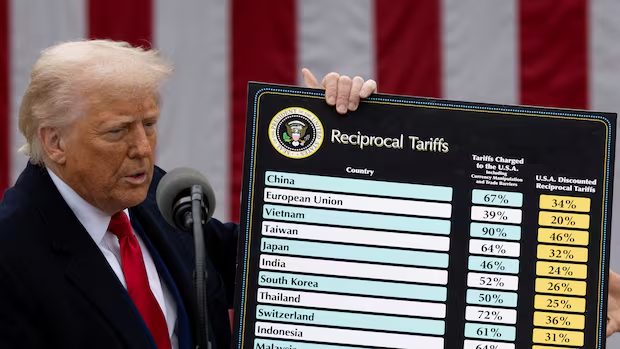
In a significant development during the Trump administration, officials initiated steps to replace tariffs that were recently overturned by the U.S. Supreme Court. This decisive action reflects a broader strategy aimed at safeguarding American economic interests while navigating the complexities of global trade dynamics.
The Supreme Court’s ruling, which declared certain tariffs unconstitutional, raised questions about the administration’s future approach to trade policy. Recognizing the potential economic repercussions of removing these tariffs, which had been intended to protect domestic industries from foreign competition, the administration swiftly moved to explore alternative measures. Their goal is to ensure that American businesses remain competitive without compromising the legal frameworks in place.
These tariffs had been a hallmark of Trump’s trade policy, aiming to reshape the landscape of international trade by imposing fees on imported goods, particularly from China. The objective was to encourage consumers to buy American-made products and diminish reliance on foreign manufacturers. However, the Supreme Court’s decision necessitated a re-evaluation of this approach, prompting officials to consider various strategies to achieve similar objectives without violating legal boundaries.
One proposed solution includes the implementation of new tariffs based on different criteria that align with international trade laws. Instead of blanket tariffs, the administration may focus on specific sectors facing significant foreign competition, thereby tailoring its strategy to maximize economic protection for domestic industries. This could involve establishing a quota system or utilizing anti-dumping measures to address unfair trade practices by certain countries.
Another avenue the Trump administration is exploring involves negotiations with trade partners. By fostering bilateral discussions, officials aim to create frameworks that address trade imbalances while potentially reducing tariffs across the board. Such negotiations could lead to more comprehensive trade agreements that benefit American businesses without the need for punitive tariffs.
Moreover, the legal challenges surrounding tariffs underscore the ongoing debates within U.S. trade policy. The Supreme Court ruling serves as a wake-up call for policymakers to ensure their strategies adhere to constitutional guidelines while still promoting American economic interests.
In conclusion, the Trump administration’s initiative to replace tariffs overturned by the Supreme Court reflects a proactive approach to trade policy. By considering tailored tariffs and engaging in negotiations, officials are strategically repositioning U.S. trade dynamics, aiming to protect American industries while staying within the limits of the law. This adaptability is essential for navigating the intricate landscape of global trade, underscoring the administration’s commitment to prioritizing American economic priorities in an ever-evolving market.
For more details and the full reference, visit the source link below:
