
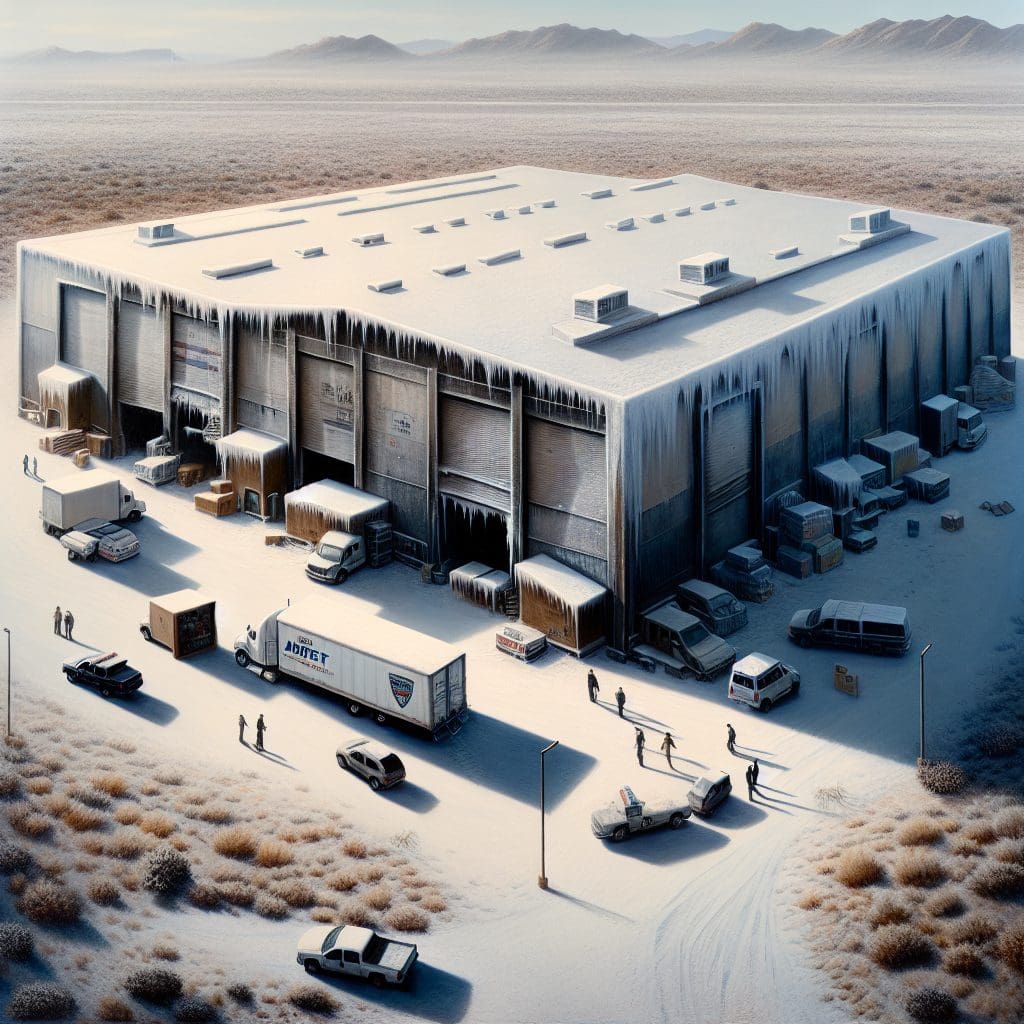
The recent allegations surrounding the damage to an ICE (U.S. Immigration and Customs Enforcement) warehouse in Arizona have drawn significant attention. This incident has sparked an FBI investigation, raising questions about the motives behind the damage and its implications on national security and immigration enforcement.
Located in a pivotal region for immigration control, the warehouse reportedly houses crucial documentation and equipment related to ICE operations. The damage is said to have occurred during a period of rising tensions surrounding immigration policies, particularly as debates intensify over border security, the treatment of migrants, and overall enforcement strategies. As ICE plays a key role in these policies, the warehouse’s vulnerability has become a focal point of scrutiny.
Witnesses in the vicinity reported unusual activity prior to the damage, with some suggesting possible coordinated efforts to disrupt ICE operations. Law enforcement agencies are considering a range of motives, from political protests to more clandestine endeavors aimed at undermining federal authority. The FBI’s involvement underscores the seriousness of the situation, as any potential threat to federal property is taken with the utmost seriousness, especially in the context of national security.
The motivation behind the damage can potentially be traced back to the contentious political climate in the United States surrounding immigration issues. Demonstrators have increasingly taken to the streets to voice their opinions, sometimes resorting to more extreme measures. Activist groups opposing ICE’s practices may perceive interruptions to their operations as a legitimate form of protest, but such actions could have serious legal ramifications. It raises ethical dilemmas about the boundaries of protest and activism in a democracy.
Federal authorities are not only focused on the immediate implications of the damage but also on the long-term consequences. The warehouse’s operations are integral to ICE’s broader enforcement strategies, and any prolonged disruption could exacerbate existing pressures on the agency, already facing scrutiny from various political and social factions. The heightened scrutiny on ICE also raises concerns about the agency’s accountability and transparency, factors frequently debated in the context of immigration reform.
As the investigation unfolds, it will be crucial for the FBI and other stakeholders to consider the implications of this event within the broader narrative of immigration enforcement and civic activism. The outcome could influence future policy discussions, law enforcement practices, and the ongoing national dialogue surrounding immigration in the United States. The intersection of federal operations and local activism continues to be a complex landscape, one likely to evolve in response to incidents like this.
For more details and the full reference, visit the source link below:
