
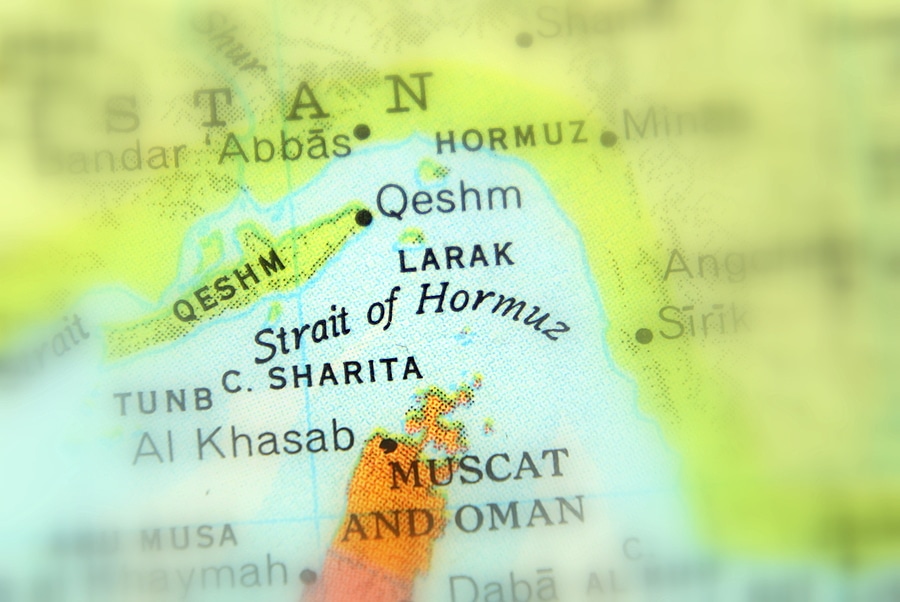
The Strait of Hormuz, a pivotal maritime corridor, has long been a flashpoint for geopolitical tensions, especially between Iran and Western powers. This narrow passage, which connects the Persian Gulf to the Gulf of Oman, is strategically significant as it handles roughly 20% of the world’s crude oil trade. In recent years, Iran has increasingly asserted its claim to exclusive sovereignty over the Strait, which has led to a legal standoff that could have profound implications for regional and global security.
Iran’s stance stems from a combination of national pride and strategic imperatives. The strait’s importance to its economy, particularly through oil exports, prompts Iran to view any foreign naval presence as a direct threat to its sovereignty. This perspective was underscored when Iran’s government proclaimed that it retains exclusive rights to regulate maritime traffic through the strait. Such declarations are often bolstered by military maneuvers and the display of naval capabilities aimed at deterring foreign ships, particularly those from the United States and its allies.
The legal backdrop of this conflict is complex. International laws, primarily governed by the United Nations Convention on the Law of the Sea (UNCLOS), dictate the rights of coastal states over maritime regions. While Iran’s claims are supported by its geographical position, the implications of maintaining sovereignty over such a crucial international waterway are contentious. Other nations rely on the free passage through the Strait for economic stability, leading to clashes in interpretation of legal rights.
In response to Iran’s claims, the United States has maintained that international navigation must remain unfettered and has conducted freedom-of-navigation operations to reinforce this principle. Such actions have resulted in heightened tensions, with both sides engaging in a precarious game of brinkmanship. Iran’s hostile rhetoric, combined with strategic military positioning, raises the stakes significantly, suggesting a willingness to confront foreign naval presences that challenge its assertions.
Moreover, the geopolitical ramifications extend beyond the immediate region. The Strait is vital not only for oil shipments but also for global economic interconnectedness. Any disruptions could lead to spikes in oil prices, affecting economies worldwide. Additionally, the rift exacerbates existing tensions between Iran and Gulf Arab states, particularly Saudi Arabia and the UAE, which, often backed by Western powers, view Iran’s ambitions as a destabilizing influence.
As search for diplomatic resolutions continues, the situation remains fragile. The battle for the gate, thus, embodies a broader struggle between state sovereignty, global trade interests, and regional security dynamics, highlighting the precarious balance that nations must navigate in an increasingly multipolar world. With the world watching, the implications of this legal standoff will undoubtedly resonate far beyond the Strait of Hormuz.
For more details and the full reference, visit the source link below:
