
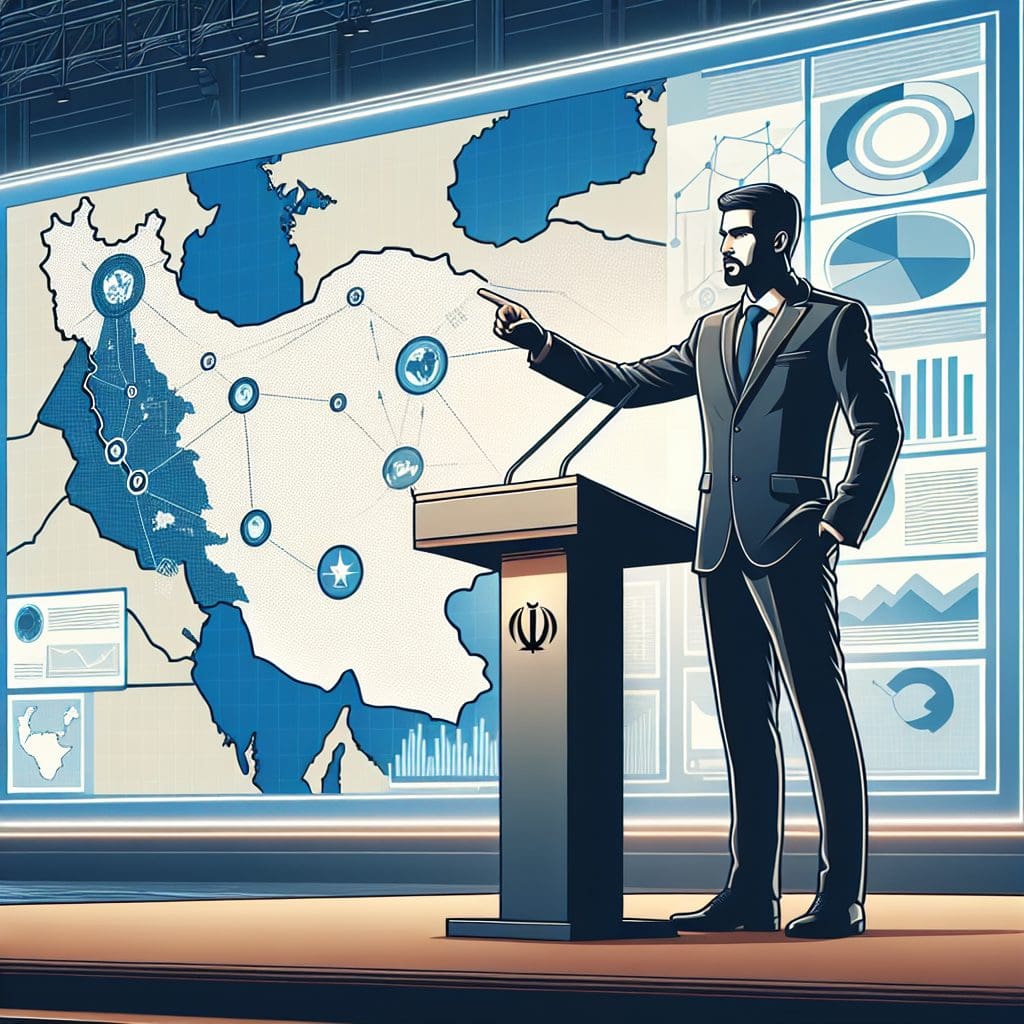
Former President Donald Trump has made headlines again with claims regarding U.S. strategic goals in Iran. According to Trump, significant progress has been made toward achieving fundamental strategic objectives in the region. However, his statement lacks a specific timeline, leaving many questions unanswered about the exact nature of these goals and what the next steps might be.
When Trump took office in January 2017, U.S.-Iran relations were at a precarious low. The Obama administration had signed the Joint Comprehensive Plan of Action (JCPOA) in 2015, aimed at curbing Iran’s nuclear program in exchange for the lifting of economic sanctions. However, Trump campaigned on the promise to scrap the JCPOA, which he accused of being flawed and ineffective. In May 2018, he withdrew the U.S. from the agreement, stating it enabled Iran to pursue nuclear weapons while still benefitting from sanctions relief.
Under Trump’s leadership, a “maximum pressure” campaign was executed, which included re-imposing economic sanctions on Iran. The administration’s strategy aimed to diminish Iran’s regional influence while constraining its nuclear ambitions. Trump’s recent assertion that the U.S. is close to achieving its strategic objectives in Iran indicates a belief that this pressure has had a tangible impact. However, his failure to provide a timeline for these achievements creates uncertainty about the administration’s future strategy.
Critics argue that while Trump’s methods may have curbed some of Iran’s activities, they have also led to increased hostility and instability in the region. The assassination of Iranian General Qassem Soleimani in January 2020, a key figure in Iran’s military strategy, exemplifies this escalatory approach. While it was intended to weaken Iran’s influence, it heightened tensions, leading to retaliatory attacks and fears of military conflict. Many analysts question whether the absence of a clear timeline for achieving these strategic goals might suggest a lack of coherence in U.S. policy toward Iran.
Moreover, international allies have raised concerns about the unpredictability of U.S. actions in the region, often fearing that Trump’s claims may not align with the realities on the ground. As other nations pursue their interests in Iran, the efficacy of the U.S. strategy remains contentious.
In conclusion, Trump’s assertions about nearing strategic goals regarding Iran reveal a pivotal moment for U.S. foreign policy. While he may feel confident about the progress made, the absence of a clear timeline and the complex dynamics of Middle Eastern geopolitics leave open the possibility of continued tensions. The real challenge for U.S. leadership lies not just in defining success but in navigating a path forward that promotes stability and peace in the region.
For more details and the full reference, visit the source link below:
