
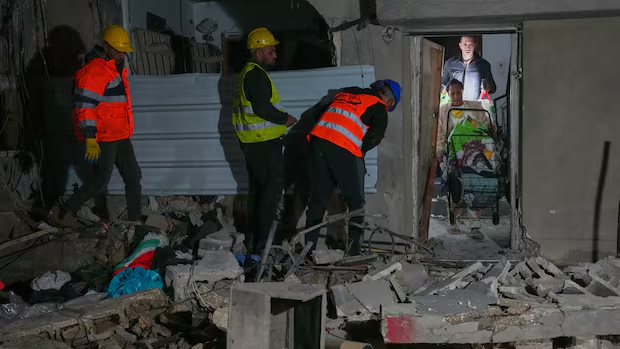
The Houthis, a significant political and military faction in Yemen, have recently asserted accountability for a missile strike on Israeli territory, a move that amplifies tensions in an already volatile region. This declaration marks a pivotal moment in the complex geopolitical landscape of the Middle East, as it intertwines the ongoing conflict in Yemen with broader regional hostilities involving Israel.
The missile strike, which reportedly targeted areas in Israel, signifies a bold escalation by the Houthis and showcases their evolving military capabilities. Previously engaged in a protracted war against the Saudi-led coalition in Yemen, the Houthis have developed a range of missile and drone technologies, often supplied by allies such as Iran. This strike serves as a demonstration of their ability to extend their reach beyond regional borders, signaling a shift in the dynamics of conflict involving Israel.
The Houthis’ accountability for the strike can be seen as part of a broader narrative of resistance against perceived imperialism and aggression in the region. Their ideological framework is deeply intertwined with anti-Zionist sentiments, intertwining their local struggles with global narratives of resistance against oppression. The strike could also be interpreted as a message aimed at galvanizing support among their base and across the Arab world, framing their actions as part of a larger fight for justice against Israeli policies toward Palestinians.
Moreover, this incident adds complexity to the already intricate relationships between various factions in the Middle East. The Houthis’ claim of responsibility may provoke a strong response from Israel, potentially escalating military actions in the region and drawing in additional players. Israel’s longstanding policy of pre-emptive strikes against threats, particularly those emanating from Iranian influence, could see increased operations aimed at countering Houthi capabilities.
Internationally, the missile strike has elicited significant concerns regarding regional stability. Nations engaged in diplomatic efforts to resolve the Yemeni conflict might find new challenges in addressing this lengthy humanitarian crisis while grappling with the implications of cross-border military actions. The Houthis’ ability to project power beyond Yemen’s borders raises questions about the future of security dynamics in the region, influencing policy decisions from Washington to Tehran.
In conclusion, the Houthis’ assertion of responsibility for the missile strike on Israel embodies a intertwining of local struggles with broader geopolitical narratives. It challenges existing power dynamics in the region and raises the stakes for various stakeholders involved in the Middle Eastern geopolitical theatre, prompting both regional and international actors to reconsider their strategies in response to this new development.
For more details and the full reference, visit the source link below:
