
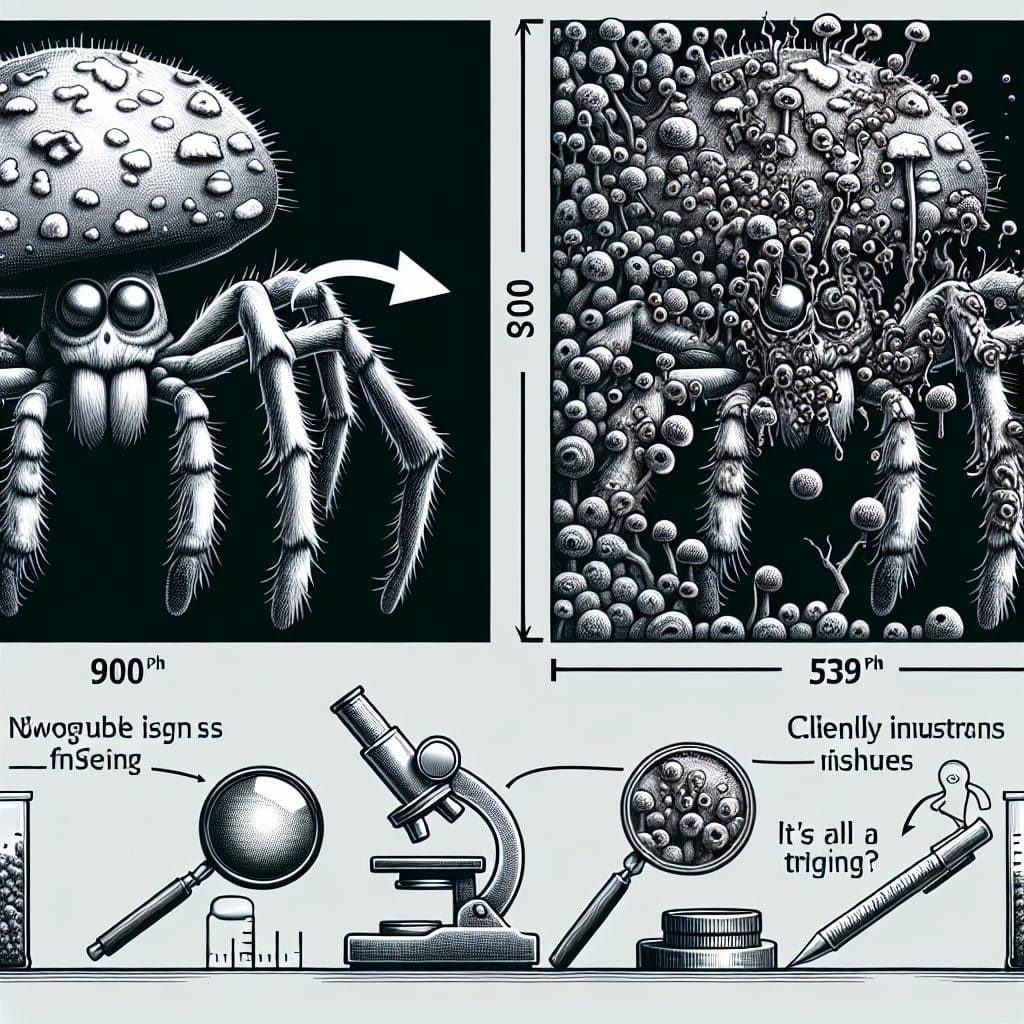
In the fascinating realm of nature, few phenomena capture the imagination quite like the relationship between certain fungi and their host insects, particularly spiders. The phenomenon often portrayed in popular media is that of the “zombie fungus,” chiefly represented by Ophiocordyceps unilateralis, which infects ants. However, recent research indicates that the case of the spider appearing to succumb to a similar fate may be a misinterpretation of this complex interaction.
When we see a spider seemingly lifeless and covered in fungal spores, it conjures images of a grotesque takeover, where the fungus manipulates its host’s behavior to facilitate its own reproductive cycle. This eerie macabre portrayal suggests that the spider has become a casualty of nature’s more sinister strategies. In reality, the interplay between fungi and their hosts is intricate and multifaceted.
Researchers studying these organisms have found that not all infections result in the dramatic behavioral manipulation seen with ants. The fungus might not be as adept at controlling spider behavior, leading scientists to believe that spiders often die from the infection without the theatrical struggle for control seen in other species. The apparent “trick” lies in the fact that while the fungus does infect the spider, it does not always lead to the dramatic outcomes commonly depicted.
This misunderstanding stems partly from the sensational narratives surrounding fungi and their parasitic tendencies. While the world is rife with examples of parasites that hijack their hosts’ behavior—thereby leading to their ultimate demise—many fungal infections in spiders result in mere fatality without the orchestrated behavior changes. Researchers have pointed out that spiders possess different biological responses and resilience than insects like ants, making their behavioral outcomes quite different when faced with similar fungi.
Furthermore, the environmental conditions play a critical role in how these fungi interact with their hosts. Factors such as humidity, temperature, and the spider’s species can significantly influence the outcome of an infection. This area of research continues to evolve, emphasizing the need for a nuanced understanding that moves beyond the sensationalized zombie narratives.
In summary, while the image of a spider felled by zombie fungi evokes powerful imagery, it is essential to recognize the subtleties involved in these relationships. The truth is often more complex and less sensational than fiction. Ongoing studies promise to deepen our understanding of these interactions, highlighting the marvels and mysteries of ecological relationships and ensuring that we appreciate nature’s strategies not just for their intrigue, but also for their profound complexity.
For more details and the full reference, visit the source link below:
