
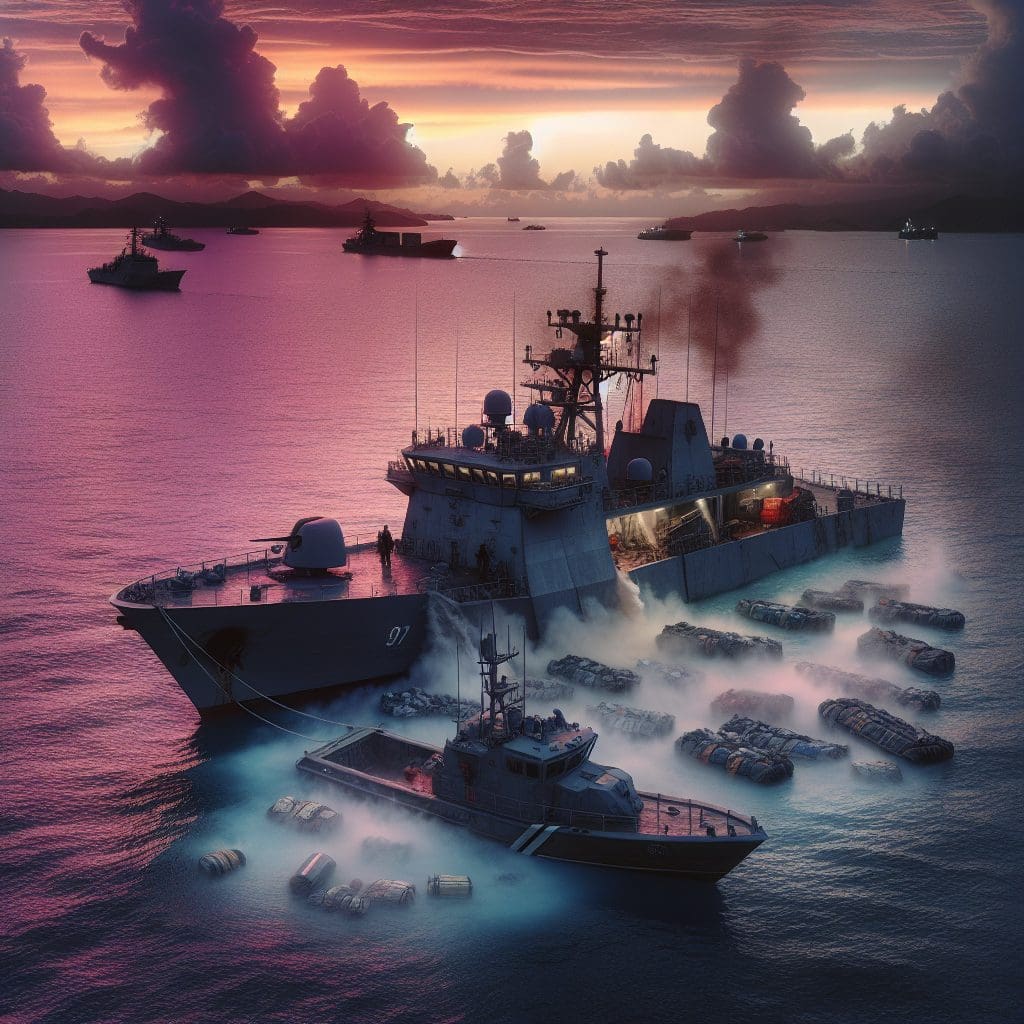
On a recent operation in the Caribbean, the U.S. military confirmed that its forces conducted a strike on a vessel suspected of being involved in drug smuggling activities. This intervention, executed as part of broader efforts to combat drug trafficking in the region, reportedly resulted in the deaths of four individuals on board the vessel. This incident highlights the ongoing challenges that law enforcement agencies face as they attempt to curb the flow of narcotics, particularly in hotspot areas known for drug transport.
The vessel in question was monitored by U.S. surveillance assets, leading to its identification as a potential drug-laden craft. The Caribbean Sea is notorious for being a major transit route for narcotics coming from South America, especially cocaine. Cartels often use these waterways to evade detection, taking advantage of the vast expanses of ocean and the difficulties in patrolling them. The U.S. military has increasingly taken an active role in counter-narcotics operations in this area to deter smuggling activities that directly impact American communities.
Following the strike, the U.S. Southern Command issued a statement affirming that the military acts under stringent rules of engagement and responds to threats to national security and public safety. The decision to engage, while tragic, was framed as a necessary action to protect U.S. interests and disrupt criminal enterprises that perpetuate violence and undermine stability in both the Caribbean and along the U.S. mainland.
The loss of life in such operations raises ethical questions and sparks debates about the implications of military involvement in law enforcement activities. Critics often argue that strikes of this nature can lead to unintended consequences, including civilian casualties. Proponents, however, contend that decisive actions are crucial in dismantling the operational capabilities of heavily armed drug trafficking organizations that pose significant threats to public safety and security.
Moreover, this incident reaffirms the importance of multilateral cooperation in addressing drug trafficking. The U.S. often collaborates with regional partners, sharing intelligence and resources to bolster interdiction efforts. These partnerships are essential in developing comprehensive strategies that address not just the symptoms but the root causes of drug-related violence and crime.
In summary, the U.S. military’s strike on the suspected drug smuggling vessel serves as a stark reminder of the ongoing battle against narcotics trafficking in the Caribbean. While it aims to safeguard communities, such actions must carefully balance the need for enforcement with the imperative to minimize loss of life and uphold human rights standards. The complexities surrounding this issue necessitate ongoing dialogue and strategic collaboration among nations in the fight against drug trafficking.
For more details and the full reference, visit the source link below:
