
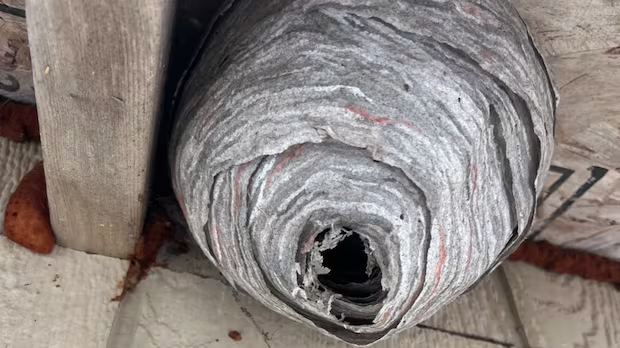
Have you ever stumbled upon a wasp nest that made you stop and take a closer look? Perhaps you spotted it hanging elegantly from a tree branch, resembling a paper lantern formed from a mosaic of intricate hexagonal structures. Wasps, often misunderstood, play a crucial role in our ecosystem; however, their nests can evoke both curiosity and apprehension. Researchers are increasingly eager to investigate these fascinating structures, shedding light on their complexities and importance.
Wasp nests, primarily constructed by paper wasps, yellow jackets, and hornets, are often built from a mixture of chewed wood fibers and saliva. This unique combination results in a papery substance that allows for the construction of multiple layers, which serve as protection for the developing larvae. Observing a nest can reveal fascinating insights into the social structure and behavior of these insects. For instance, wasps are social creatures that exhibit intricate hierarchies, with queens, workers, and drones all playing distinct roles within the colony.
Researchers are particularly interested in analyzing wasp nests to understand their behavioral ecology. By studying the construction patterns, size, and location of nests, scientists can gather data about environmental conditions and the species’ adaptability. For example, a nest built high in a tree may suggest avoidance of ground predators, while nests placed in sheltered areas may indicate an adaptation to climate conditions. Such investigations can provide valuable information on how wasp populations are responding to climate change and urban expansion.
Moreover, the composition of the nests themselves can offer clues about the health of local ecosystems. Wasps are both pollinators and predators, feeding on a variety of pests. By monitoring their populations and nesting behaviors, researchers can assess the balance of local ecosystems, revealing whether certain species are thriving or declining. This relationship is crucial for maintaining biodiversity.
The unique properties of wasp nests can even inspire innovations in material science and architecture. The lightweight yet durable nature of the nest construction materials has potential applications in developing sustainable building solutions. As scientists dissect the intricacies of these nests, they may uncover bioinspired designs that could revolutionize how we think about constructing safe and sustainable homes.
In conclusion, encountering a wasp nest, while often met with caution, can lead to significant research opportunities. The eagerness of researchers to investigate these nests highlights the intersection of ecology, behavior, and innovation. Each nest tells a story of adaptation, survival, and the complex interrelationships within our ecosystems, making them worthy subjects of scientific inquiry.
For more details and the full reference, visit the source link below:
