
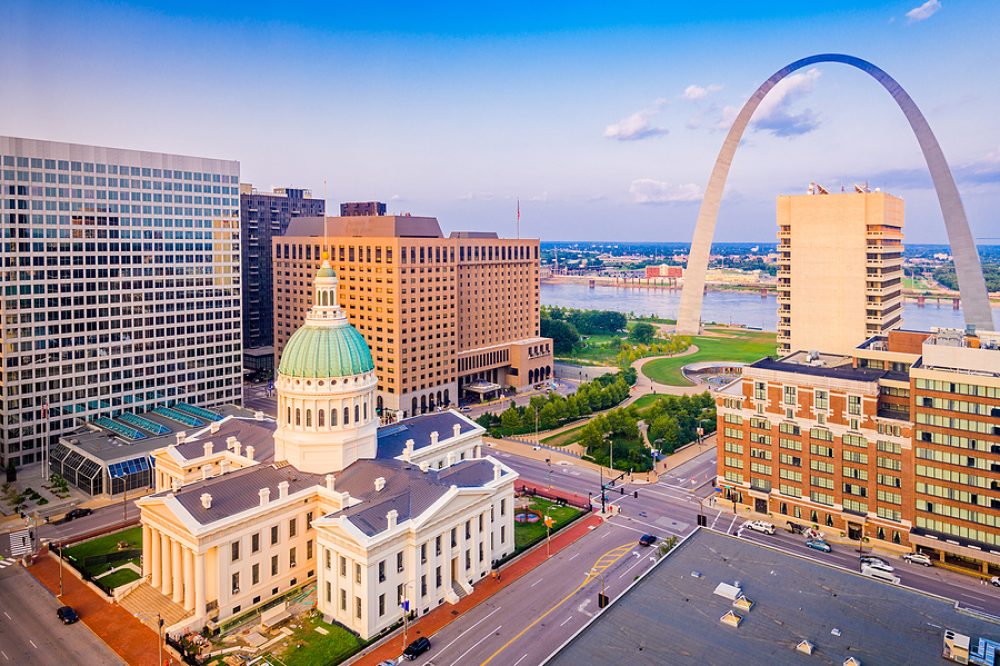
The Old Courthouse, 11 N 4th Street, St. Louis, Missouri, was completed in 1864.
Old Courthouse – A Historic Landmark in Downtown St. Louis
(STL.Directory) The Old Courthouse stands as one of the most recognizable and historically significant landmarks in downtown St. Louis, Missouri. Located just west of the Gateway Arch grounds, this iconic structure has witnessed some of the most pivotal legal and cultural moments in American history. With its distinctive green dome and classical architecture, the Old Courthouse serves as a powerful reminder of the nation’s past while remaining a must-visit destination for tourists, historians, and local residents alike. Visit its Wikipedia page.
Originally completed in the mid-19th century, the Old Courthouse was designed to reflect St. Louis’s growing importance as a major river city and commercial hub. At the time of its construction, St. Louis was rapidly expanding, fueled by westward migration and trade along the Mississippi River. City leaders envisioned a courthouse that would symbolize stability, justice, and civic pride. The result was a grand building that blended Greek Revival and Italianate architectural styles, crowned by an elegant dome that still defines the downtown skyline today.
One of the most notable chapters in the courthouse’s history centers around the infamous Dred Scott case. In the 1840s and 1850s, enslaved man Dred Scott and his wife Harriet filed suit for their freedom within these very walls. Their legal battle would eventually reach the U.S. Supreme Court, leading to one of the most controversial decisions in American history. While the ruling denied Scott his freedom, it intensified national debate over slavery and played a role in shaping events leading to the Civil War. Visitors to the courthouse can explore exhibits that detail this case and its far-reaching impact on American society.
Beyond the Dred Scott trials, the Old Courthouse served as St. Louis’s central judicial building for decades. Countless cases passed through its courtrooms, shaping the city’s legal framework and documenting everyday life in a growing Midwestern metropolis. From land disputes and business conflicts to criminal trials and civic matters, the courthouse stood at the heart of St. Louis governance during a formative era.
The building itself is a masterpiece of 19th-century craftsmanship. Its rotunda features soaring ceilings, intricate plasterwork, and a dramatic spiral staircase that leads to upper levels. The dome, once the tallest structure in the city, offers breathtaking views of downtown and the Mississippi River. Marble floors, original woodwork, and historic courtroom chambers transport visitors back in time, offering a tangible connection to the past.
In the 20th century, as newer government buildings emerged, the Old Courthouse was preserved rather than demolished, in recognition of its cultural and historical value. It eventually became part of the Jefferson National Expansion Memorial, which also includes the Gateway Arch. Today, the courthouse operates as a museum, curated by the National Park Service, offering immersive exhibits on civil rights, westward expansion, and the role St. Louis played in shaping American history.
Visitors can explore permanent exhibitions that focus on slavery, freedom suits, early city government, and the broader social changes of the 19th century. Interactive displays, restored courtrooms, and personal stories bring history to life, making the courthouse an educational destination for students and families. Special events, ranger-led tours, and historical programs are frequently hosted, providing deeper insight into the building’s significance.
The Old Courthouse also plays an important role in downtown St. Louis’s cultural tourism economy. Its location near major attractions, restaurants, and entertainment venues makes it a natural stop for visitors exploring the city. Whether arriving on foot from the Arch grounds or as part of a guided city tour, guests are consistently impressed by the courthouse’s presence and preservation.
For photographers and history enthusiasts, the building offers countless opportunities to capture stunning images. The contrast between its historic architecture and the modern cityscape surrounding it highlights St. Louis’ evolution over time. Seasonal events, holiday lighting, and civic ceremonies occasionally take place on the courthouse steps, further cementing its role as a living landmark.
Educational institutions regularly partner with the courthouse for field trips and history programs. Teachers appreciate the hands-on learning environment, while students gain a deeper understanding of civil rights and American legal history. The courthouse serves as a powerful classroom where lessons extend beyond textbooks.
From a business and tourism perspective, the Old Courthouse contributes to downtown St. Louis’s revitalization. It draws consistent foot traffic, supports nearby businesses, and strengthens the city’s identity as a destination rooted in history. Hotels, restaurants, and tour operators benefit from its presence, making it a cornerstone of the local economy.
Today, the Old Courthouse stands not only as a preserved relic but as a symbol of progress, reflection, and resilience. Its walls tell stories of struggle, justice, and transformation—stories that continue to resonate today. Whether you are a lifelong resident or a first-time visitor, stepping inside the Old Courthouse offers a meaningful journey through American history.
As one of St. Louis’ most treasured landmarks, the Old Courthouse remains a powerful reminder of the city’s past and its ongoing role in shaping the future. It is more than a building—it is a monument to the pursuit of justice and the enduring spirit of the community it serves.
Nearby destinations:
- The Gateway Arch
- Ballpark Village
- Hotel Saint Louis – Perfect Place to Stay
- Crown Candy Kitchen – Restaurant Serving the Community Since 1913